
Shell and core, Cat A and Cat B: Dubai office fit-out terms explained
Office fit-out terms in Dubai get used loosely. An agent says fitted, a landlord says Cat A, a contractor says shell and core, and all three can be describing the same floor in the same week. These are handover states, and they decide who builds what, who pays, and what you will be asked to tear out when the lease ends. The short version. Shell and core is the building with nothing inside your tenancy. Cat A is a complete but anonymous office, and in most grade-A Dubai leases the landlord delivers it. Cat B is your company made physical, and the tenant funds it.
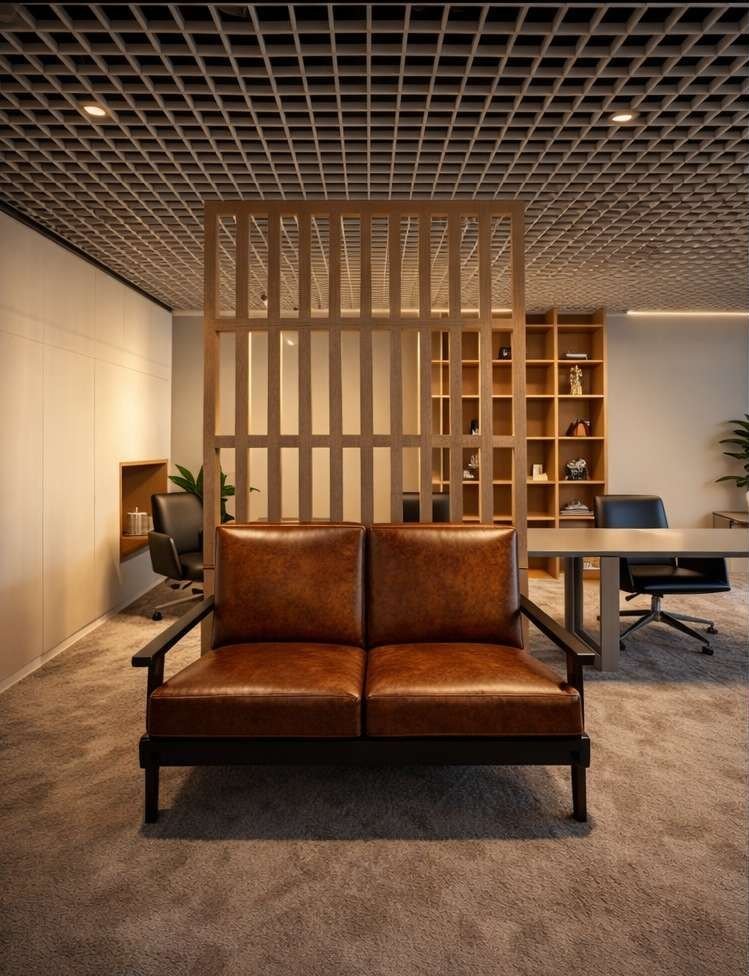
Office fit-out terms your lease will not define
The vocabulary is borrowed from the London market. Your lease names a handover state somewhere in the schedules, usually in a single line and without explaining it, and that line is the baseline for your budget, your programme, your landlord contribution and your exit bill.
Listings then add labels that are not states at all. Fitted means the previous tenant left something behind, which is either an asset or a demolition bill. Plug and play, sometimes marketed as Cat A plus, means furnished and cabled to a standard that varies by landlord. Ask for the specification in writing rather than the adjective.
Shell and core meaning in a Dubai tower
Stand in a shell and core unit and you are on a bare slab looking at a bare soffit. The developer has built the frame, the facade and the core: stairs, lifts, lift lobby, common toilets, risers. Building services climb those risers and stop at your boundary, capped.
What arrives at that boundary is usually chilled water flow and return with isolating valves, an electrical supply to a builder's board with an agreed load allocation, a capped sprinkler branch, a drainage connection and a telecom entry point. None of it is distributed. There is no ceiling, no lighting inside the demise, no cooling at room level, no floor finish and sometimes no screed. Everything above that slab is tenant cost, which is why shell and core units let at a lower rent and cost the most to occupy.
The words themselves need checking. Some developers call a unit shell and core when it already has a screed and a painted soffit. Others mean the slab and nothing else. Ask for the handover specification, and if the lease attaches none, ask for dated photographs of the unit on the day it was released to you. That is the baseline your reinstatement obligation gets measured against years later.
What is a Category A fit-out in Dubai
A Cat A fit-out makes a unit usable without making it anybody's in particular. A tenant walks in, puts desks down and works. Nothing in the space says who they are.
What a Dubai landlord normally delivers as Cat A:
In a grade-A office tower this is the landlord's scope and the landlord's cost. It either exists before you sign or it is promised as a lease condition with a delivery date. Put that date in the agreement with a remedy attached, because a late Cat A pushes your programme week for week and nobody refunds the rent-free you burned.
The part tenants miss is that Cat A is engineered for an open plan. Lighting, air and fire coverage are set out for a floor with no walls in it. The moment your layout cuts that floor into rooms, you are modifying a completed and certified system, and every bit of that modification is Cat B.
- Raised access floor, or a levelled and finished screed in buildings that do not use one
- Suspended ceiling grid and tiles
- General lighting set out to an open-plan layout
- Air conditioning distribution and diffusers, balanced to that same open plan
- Sprinkler coverage and smoke detection to the open plan, panel connected and tested
- Finished entrance door, window sills and blinds where the landlord provides them
Cat B fit-out: the part that belongs to your company
Cat B is everything your business needs and the building is indifferent to. Partitions and doors. Glazed fronts and the acoustics behind them. Meeting rooms, phone booths, reception, tea point. Floor and wall finishes, feature ceilings, joinery, signage, brand colours. Data, AV, access control, and loose furniture where it is in scope at all.
Then the services work all of that sets off. Enclose one room and the sprinkler set-out changes, the detection loop reroutes, emergency lighting moves, supply and extract need rebalancing, and small power and data have to arrive at a wall that did not exist last week. All of it happens inside a ceiling void already carrying the landlord's services, so it has to be coordinated, resubmitted, installed and recommissioned.
Which is why mechanical and electrical work dominates a Cat B budget. Published breakdowns put MEP at twenty to thirty per cent of an office fit-out, and that is fair on a Cat A floor you barely disturb. Strip the ceiling out on a refit and the share we see runs up into the forties and fifties. The full arithmetic sits in what actually drives an office fit-out cost per square foot.
Shell and core vs Cat A: who pays for which half
The split is a commercial negotiation wearing a technical description, and it moves with the building. Older mainland stock, warehouses and mall units start the tenant at shell and core, carrying both bands. Taking a unit already in Cat A removes a whole band of cost, so it belongs inside the rent comparison rather than being treated as a lucky extra.
Where the landlord will not deliver Cat A, ask what he contributes instead. Rent-free periods priced in months and capital fit-out contributions paid toward the works are both in normal use in Dubai. We are not going to publish a percentage of annual rent as the going rate for either. The figure tracks how long the unit has stood empty, the term you are signing, your covenant strength and how reusable your layout is for the next tenant. A number printed in a blog is not a negotiating position.
What is worth fixing in writing:
All of it gets negotiated before signature or not at all.
- When the contribution is paid. Against certified valuations as work proceeds is normal, and payment only after you open for business is a cash flow problem you want to know about at signature.
- Whether it covers your whole scope or only elements the landlord has approved.
- Whether the rent-free period runs from lease commencement or from permit approval. It almost always runs from commencement, so approvals eat it before a tool reaches site.
- Who owns landlord-funded works at expiry, and whether they are carved out of your reinstatement obligation. Paying for the same partition twice, once to build it and once to remove it, is avoidable with one sentence in the lease.
Landlord vs tenant fit-out scope in Dubai changes with the zone
The vocabulary holds across the city. What sits behind it does not, because the authority reviewing your drawings, the party issuing the NOC and the rules the building enforces all change with the address.
DIFC runs its own building control, separate from the rest of Dubai, and expects the consultant and the contractor to be registered with it. Handover is usually Cat A, the fit-out rules are enforced, and the review runs longer. The same layout with the same finishes, priced in DIFC or Downtown, typically comes back around a fifth above JLT or Internet City before anyone upgrades a material.
JLT sits under DMCC for the fit-out approval, while the building is run by an owners association and its appointed facilities manager, which in many JLT towers is Concordia. DMCC stamps the drawings; the building controls access, lift slots, working hours, hoarding, deposits and sign-off. We have handed over offices in Platinum Tower for Solvu Solutions and AD Tyres, and the lesson from that tower is that the landlord's handover state was not identical floor to floor. A Cat A baseline is a unit fact rather than a building fact.
Business Bay and Downtown are mainland, so the permit route runs through Dubai Municipality with the master developer NOC in front of it, and in Downtown the developer's fit-out guidelines are enforced with the seriousness of a code. Trakhees governs Palm Jumeirah, Discovery Gardens, Ibn Battuta and the Jebel Ali areas through its own building control and EHS department, where contractor registration is a genuine filter rather than a formality. Dubai Investments Park adds a zone-level approval through the DIP authority on top of the permit and Civil Defence route.
Which authority stamps which drawing has its own article on this site. For scope, confirm the jurisdiction before you agree who delivers Cat A, then read the building's fit-out manual. It decides how much of your Cat B has to be built by somebody the building nominates rather than the contractor you picked.
How the reinstatement clause reaches back into your Cat B design
Reinstatement gets treated as an exit problem. It is a design problem, and the design is happening now.
The clause sits in a lease you sign before Cat B is drawn, and the wording sets the size of the eventual bill. Return the unit to the condition at commencement, fair wear and tear excepted, and you hand back a Cat A office. A clause obliging you to strip back to shell and core has you paying to remove a Cat A the landlord built. Both versions turn up in leases in the same tower.
So price the exit before the design is frozen, because plenty of Cat B decisions cost almost nothing to install and a great deal to reverse:
Carpet tiles, demountable partitions and loose joinery do the same work and leave far less behind.
Before you sign, ask whether landlord-approved works can be written out of the reinstatement obligation, and keep the signed incoming condition record with dated photographs. That record settles the argument at exit, and almost nobody can find it when the time comes. The strip-out scope itself is covered in handing an office back at the end of a lease.
- Glued vinyl or bonded carpet on a screed, where adhesive residue can turn a handover into a re-screed
- Cutting raised floor panels for floor boxes, since every cut panel is a replacement panel
- Feature ceilings that replace the landlord's grid instead of sitting below it
- Moving FCUs, diffusers, sprinkler heads and detectors off the approved open-plan set-out
- Brand graphics bonded directly to landlord surfaces
Which level of fit-out suits which tenant
A corporate tenant with a brand guide and a five-year term should take Cat A and put the Cat B budget into layout and acoustics. Brand elements are the cheap and loud part of that budget. Meeting room walls that genuinely block sound are the expensive part, and the reason staff stop complaining.
A startup watching its balance should not be building Cat B in year one. A fitted unit, a plug and play floor or a serviced office carries higher rent against almost no capital outlay, and defers the real fit-out to a lease signed when headcount is known rather than guessed.
Retail and F&B tenants inherit a different vocabulary entirely. Mall units arrive as a bare shell with a fit-out manual that reads like a code, and there is no Cat A in the conversation. The landlord's design review, nominated subcontractors for life safety work and a fixed trading date replace it. On Gashisha and Dr Sheesha on Sheikh Zayed Road, and on Saudi Dates Centre in Dubai Hills Mall, the governing documents were the fit-out manual and the extraction strategy. The handover label barely mattered.
Tenants on a short or uncertain occupancy should design Cat B to come apart. Keep the landlord's ceiling grid, use demountable partitions and loose joinery, avoid anything bonded to a landlord surface. The layout can still be good, it simply has to be reversible.
Where the weeks go before a single wall is built
Tenants budget for construction and forget the queues in front of it: the landlord's design review, the authority submission, and the DEWA or Civil Defence route for anything touching electrical load or fire strategy. Adding labour shortens the build and does nothing to an approval queue or a joinery lead time. That is why a rent-free period rarely covers a fit-out, since it runs from lease commencement and the first stretch goes on waiting for stamps. Appoint a contractor before the lease is signed, so the manual, the handover state and the approval route get read while you still have negotiating room.
Where we sit
REDESIGN FIT OUT is Redesign Interior Decoration Contracting Co. L.L.C. We build commercial interiors across Dubai: offices in JLT towers, restaurants on Sheikh Zayed Road, retail inside mall envelopes, clinics and salons. Send us the handover clause and the building name before you sign, and we will tell you which state the unit is genuinely in, what the building's manual will force into your scope and where the Cat A and Cat B line falls. The number is +971 56 508 0888. What we take on across a full office project is set out on the office fit-out in Dubai page.
Questions this raises
What is the difference between shell and core and Cat A?
Shell and core is a bare slab with capped services at the boundary. Cat A is a finished, working, anonymous office built on that slab by the landlord, normally at the landlord's cost. The difference is a whole band of cost and several weeks of programme. Confirm the state of your unit in writing, because a listing that says fitted describes whatever the previous tenant left behind, and handover states can differ floor to floor inside one building.
What does a Cat B fit-out include, and who pays for it?
Cat B covers partitions, doors, glazing and acoustics, meeting rooms, joinery, reception, tea point, floor and wall finishes, feature ceilings, branding, data, AV and access control, plus every alteration to the ceiling, lighting, sprinklers, detection and air conditioning those elements trigger. The tenant pays for it, and on a refit the mechanical and electrical share alone can run to half the budget.
Who is responsible for the fit-out, the landlord or the tenant?
The lease decides, and it varies by building rather than by any city-wide rule. The common pattern in grade-A Dubai towers is landlord delivers Cat A, tenant delivers Cat B. In older mainland buildings, warehouses and mall units the tenant usually starts from shell and core and carries both bands, and the negotiation is then about what the landlord contributes instead.
Does a landlord contribution change what I have to remove at the end?
Not automatically, and this is where tenants get caught. A contribution toward Cat B works does not by itself exempt those works from a reinstatement clause, so you can end up funding the same partition twice. Ask for landlord-funded elements to be carved out of the obligation in writing at lease stage, and keep the signed incoming condition record with dated photographs so the exit baseline is not argued from memory.
Send the drawings, or just the address.
We measure, check the services and tell you what the authority will require.
Other notes
Pharmacy fit-out in Dubai: DHA licensing and what the unit needs
What DHA requires from a pharmacy fit-out in Dubai: minimum area, ceiling height, cold chain design, controlled drug cabinets and the final inspection loop.
7 October 2026 · 13 min readOffice renovation in Dubai: rebuilding around a working team
How an office renovation in Dubai runs while staff keep working: zoning, night windows, dust control, partial MEP and the reinstatement clause.
5 October 2026 · 10 min readOffice fit-out timeline in Dubai: stages and hidden delays
The real Dubai office fit-out timeline, stage by stage: survey, approvals, procurement, construction and handover, plus where projects lose real weeks.
4 October 2026 · 12 min read