
Office Fit-Out Cost Per Sqft in Dubai: What Actually Drives It
Ask ten Dubai fit-out contractors for an office fit-out cost per sqft and you will get ten numbers, every one of them defensible and none of them comparable. The rate is an output. It is the finished scope divided by the area you leased, and both halves of that fraction move under you. We do not publish a price list. A contractor who quotes a firm per-square-foot rate on a phone call is quoting a guess he will revise the week he opens the ceiling. What is worth your time is the order in which decisions move the number, so that when three quotations land on your desk you can tell which one is cheap and which one is missing pages.
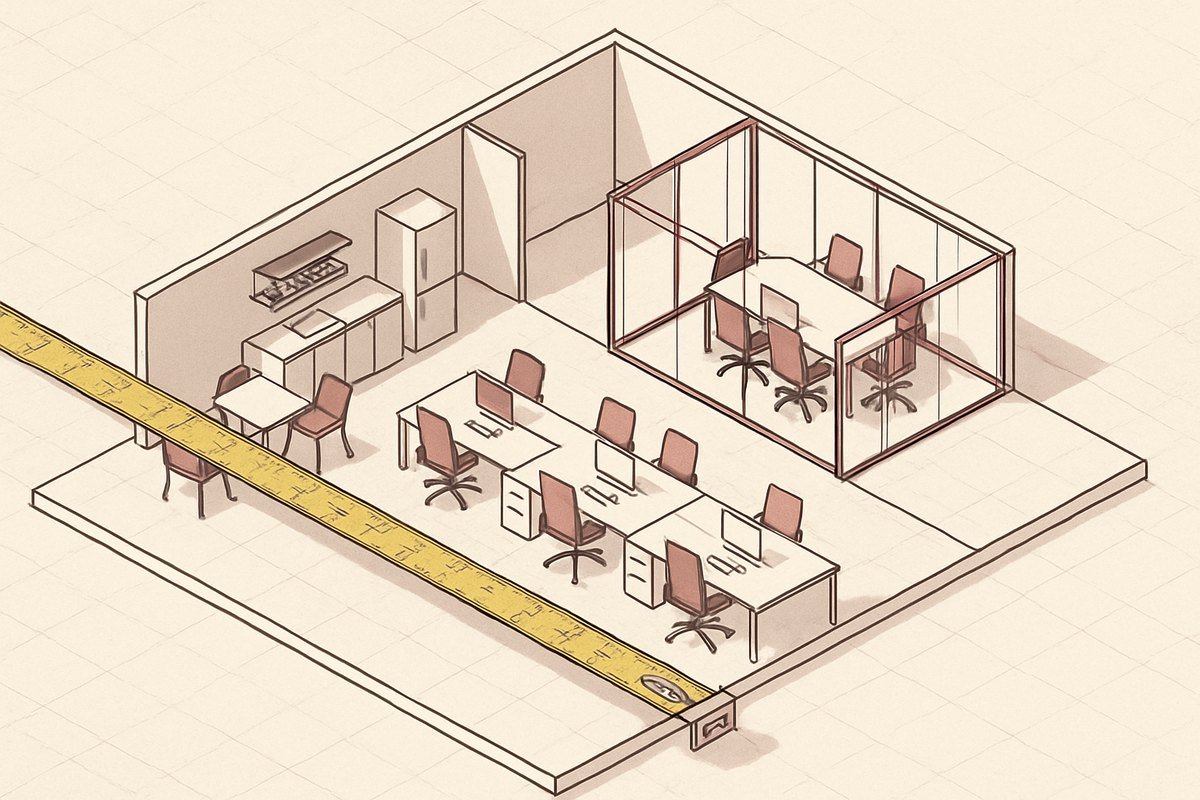
What an office fit-out cost per sqft in Dubai actually measures
Start with the denominator, because that is where the first distortion hides. Landlords quote area as gross leasable area, which carries your share of the core, the lift lobby and the corridors. You do not fit out any of that. Divide the same scope by usable area instead and the rate per square foot jumps by the building's efficiency loss, often ten to twenty per cent in a Dubai tower, without a single extra day of work on site. Before you compare two rates, ask both contractors which area they divided by, and check it against the lease drawing rather than the brochure.
Then the numerator. A fit-out price is a scope, and scopes differ far more than finishes do. The items that most often sit outside a low headline rate:
Two quotations at the same headline rate can finish a third apart once the exclusions page is read properly. That page decides more than the finishes schedule does, and it is the part to read first in what a fit-out quotation should contain.
- Loose furniture, and sometimes fixed furniture too
- Structured cabling, racks, access control, screens and everything else the IT contractor assumes the fit-out contractor is doing
- Authority submission fees, consultant fees, contractor all-risk insurance, landlord NOC charges and refundable deposits
- Reinstatement at the end of the lease, which your lease almost certainly obliges you to fund
- Provisional sums, which are placeholders rather than prices
Shell and core, Category A, Category B: three different starting lines
Half the confusion around office fit-out cost in Dubai comes from tenants comparing quotes for units that are in completely different states.
Shell and core is the building, not the office. Structure, façade, core toilets, risers, main services brought to the floor and a raw slab. No ceiling, no lighting, no distributed air conditioning, no floor finish, sometimes not even a screed. Everything above the slab is yours.
Category A is the landlord's version of a lettable office: raised floor or screed, suspended ceiling, general lighting, primary air conditioning distribution, sprinklers and fire detection to an open-plan layout, finished lift lobby. An empty office that works.
Category B is your business made physical. Layout, partitions, meeting rooms and their acoustics, glazing, joinery, tea point, branding, AV, data, plus the alterations to ceiling, lighting, sprinklers and air conditioning that every new wall triggers.
The commercial point: leasing a unit already in Category A removes a whole cost band from your project. Ask the agent to confirm the unit's state in writing before you sign, because "fitted" in a listing means whatever the previous tenant left behind. Where you take shell and core, ask what the landlord contributes. Rent-free periods and fit-out contributions get negotiated before signature or not at all.
Phasing works, within limits. Taking Category A now and Category B when headcount justifies it is a real route, and so is delivering Category B zone by zone on one floor. What does not work is building a ceiling twice. Any phase that reopens the ceiling void pays again for coordination, authority re-submission and access, and the saving evaporates. Design the full layout once, then build it in stages.
MEP is the line that decides your office fit-out price
Published breakdowns tend to put mechanical, electrical and plumbing at twenty to thirty per cent of an office fit-out budget. That is roughly right on a clean Category A floor where you keep the ceiling grid and re-terminate. On a refit where the ceiling comes down and the layout changes, we routinely see MEP take forty to fifty-five per cent, and it is the most common reason a budget set from a rate per square foot lands short.
Walls drive services. Every enclosed room needs its own sprinkler coverage, smoke detection, emergency lighting, supply and return air, and usually its own temperature control. A meeting room that reads as two lines on a layout reads in the MEP drawings as a rebalanced air conditioning zone, relocated sprinkler heads, a re-routed detection loop, extra small power and a data drop. Then it has to be coordinated in a void that already contains someone else's services, submitted, installed, tested and commissioned.
MEP stays under control when a few habits happen before the renders, not after:
Load changes bring their own queue. Additional electrical load goes to DEWA. Sprinkler and detection modifications go through Dubai Civil Defence with the rest of the fire strategy. Neither is expensive against the build, and both are slow when they start late.
- Survey what is actually there. Landlord as-built drawings in a fifteen-year-old tower are a starting point, not evidence. Open the ceiling in a few positions and look.
- Fix the MEP scope before the layout is signed. Deciding early whether you keep the existing air conditioning zoning or rebuild it swings the mechanical package harder than any finish you will choose.
- Freeze the design at submission. Once drawings go to the authority, a change costs a re-submission plus a repricing of several trades. Moving a partition six hundred millimetres after coordination reprices mechanical, electrical, fire and ceiling at the same time.
Why the same drawing costs more in DIFC than in JLT
Take one office layout and price it in two towers. Same area, same finishes schedule, same joinery. The number that comes back from a DIFC or Downtown address typically sits a fifth or more above the same job in JLT or Internet City, before anyone upgrades a material.
Where that money goes:
None of that appears on a finishes schedule and all of it is in the price. A contractor who prices your unit without reading the building's fit-out manual will meet these clauses in week two, on your budget.
- The approval route. JLT sits under DMCC, Internet City and d3 under the Dubai Development Authority, mainland towers under Dubai Municipality, the Palm and Jebel Ali under Trakhees, and DIFC runs its own building code and its own review. Different reviewers mean different drawing packages, different appointed consultants and a different number of cycles. If you are unsure which applies to your unit, start with which authority approves your fit-out.
- The fit-out manual. Premium buildings run longer manuals and enforce them: nominated subcontractors for anything touching life safety, specified hoarding standards, approved materials lists, supervision by the landlord's consultant.
- Access. A trading tower gives you working hours rather than a working day. Noisy trades go into agreed windows, deliveries into booked service-lift slots, every worker through an induction, protection down in common areas before the first tool comes out. In grade-A addresses those windows are narrower and the penalties are real.
- Money held. Higher refundable deposits, performance bonds, larger insurance limits.
Office renovation cost in Dubai: what the strip-out finds
Renovating a previously fitted office behaves differently from building into an empty Category A floor, and the difference is uncertainty rather than area.
Strip-out itself is predictable: demolition, segregation, transport to an approved facility, making good. What is not predictable is what appears once the ceiling is open. Chilled water valves nobody has serviced, fire dampers in the wrong position, a distribution board with no spare ways, cabling left by three previous tenants, floor boxes fed from circuits that were never documented. Each one is a pricing decision taken mid-project instead of at tender.
That is what contingency is for. Fifteen to twenty per cent is the working range on a refit, and it exists to absorb the building rather than to fund a change of mind. In practice it gets eaten in the first month by change orders, and the pattern repeats often enough to name:
Timing decides what a variation costs, because it is priced against the original scope. The same extra meeting room carries one number during design, another after approval, and a third after the joinery factory has cut sheets. Have your contractor price variations before he builds them, in writing, with the programme impact stated. A variation that arrives as a number afterwards is a dispute waiting to happen.
Contingency is your money. It should come back unspent unless the building or a decision of yours spends it.
- A late layout change after MEP coordination, which reprices several packages at once
- A material specified without a lead time check, then substituted
- Something found behind the ceiling
- Scope the tenant assumed was included, discovered at the first valuation
How long it takes, and why weeks cost money
Programme belongs in a cost article because site management, supervision, insurance, hoarding and protection burn at a weekly rate whether or not the scope changes. An extra month costs money even when nothing is added to the drawings.
Our own office handovers in JLT range from eight weeks for a small suite with a clean approval to twenty weeks or more for a large floor plate under a full authority cycle. Area on its own predicts very little next to the building and the jurisdiction, which is the argument made at length in how long an office fit-out takes in Dubai.
Approvals sit at the front and do not compress when you add labour. Neither does a joinery factory. Money buys back weeks on site and it does not buy back weeks in a queue.
If you want a real number for a real unit instead of a rate, request a fit-out estimate with the lease drawing and the building name. We survey the space, check what is genuinely in the ceiling, read the fit-out manual and price the scope. That is how an office fit-out budget gets set with a straight face. A drawing or just the address, sent to +971 56 508 0888, is enough to start.
Questions this raises
How much does an office fit-out cost per sqft in Dubai?
There is no honest single rate and we do not publish one. The same floor plate produces very different numbers depending on whether you start from shell and core or Category A, how much of the ceiling and services you touch, which authority reviews the drawings and what the building's fit-out manual demands. What you can ask for is a rate against a defined scope: a specific layout, a finishes schedule, a named MEP approach and a written exclusions list. Compare those, not headline rates.
What is the difference between Category A and Category B fit-out cost?
Category A is the landlord's shell-to-office work: floor, ceiling, general lighting, primary air conditioning, sprinklers and detection on an open plan. Category B is everything that makes it your office, and it carries the layout, joinery, glazing, branding and every services alteration those trigger. Category B is usually the larger of the two, because the coordination and the bespoke elements live there. Leasing a unit already in Category A avoids the first band entirely, so confirm the unit's actual state in writing before signing.
Why is MEP such a large share of an office fit-out price?
Because partitions generate services work. Every enclosed room changes sprinkler coverage, detection, emergency lighting, air distribution and small power, and each of those has to be coordinated in the ceiling void, approved, installed and commissioned. On a straightforward Category A floor MEP can sit near a quarter of the budget. On a refit where the ceiling comes down, forty to fifty-five per cent is common.
Do we need permits for an office fit-out, and what do they cost?
Yes. Every fit-out in Dubai needs landlord approval plus approval from the authority that governs your building, and anything touching fire strategy goes through Dubai Civil Defence. The authority fees themselves are a minor line against the build. The real cost sits in the consultant drawings that make a submission approvable, and in the weeks lost when it comes back for a redraw. Budget the time and get the drawing package right the first time.
How long does an office fit-out take in Dubai?
Anywhere from eight weeks for a small suite with a clean approval to twenty weeks or more for a large floor plate in an occupied tower. Approvals and long-lead joinery set the front and the middle of the programme, and extra labour does not compress either. The full breakdown, with real project durations, is in how long an office fit-out takes in Dubai.
Can we do Category A now and Category B later?
Yes, and phasing is a legitimate way to spread cost, particularly on a shorter lease. The condition is that the full layout is designed once, up front, so ceiling and services coordination happens a single time. Phasing that reopens a finished ceiling pays twice for coordination, access and approval, which usually costs more than it saved.
Send the drawings, or just the address.
We measure, check the services and tell you what the authority will require.
Other notes

Pharmacy fit-out in Dubai: DHA licensing and what the unit needs
What DHA requires from a pharmacy fit-out in Dubai: minimum area, ceiling height, cold chain design, controlled drug cabinets and the final inspection loop.
7 October 2026 · 13 min read
Office renovation in Dubai: rebuilding around a working team
How an office renovation in Dubai runs while staff keep working: zoning, night windows, dust control, partial MEP and the reinstatement clause.
5 October 2026 · 10 min readOffice fit-out timeline in Dubai: stages and hidden delays
The real Dubai office fit-out timeline, stage by stage: survey, approvals, procurement, construction and handover, plus where projects lose real weeks.
4 October 2026 · 12 min read