
MEP contractors in Business Bay and Al Quoz: tower vs shed
Ask two MEP contractors in Dubai to price the same list of works and the paperwork looks almost identical. Fan coil units, ductwork, a distribution board fed off the landlord's riser, containment, sprinkler and detector modification, water in and waste out. Then watch the two jobs run. A floor in a Business Bay tower and a shed in Al Quoz Industrial 3 have very little in common once the crew is on site. In the tower, the building sets the programme. You work when the goods lift is yours, you drill when the hours allow it, and you touch the fire panel when an engineer from the facilities management office is standing next to you. In Al Quoz nobody books a lift. The truck reverses up to the roller shutter and the material is inside in twenty minutes. What eats an Al Quoz programme instead is the incoming supply and the fire scheme, and both of them sit with authorities rather than with your landlord.
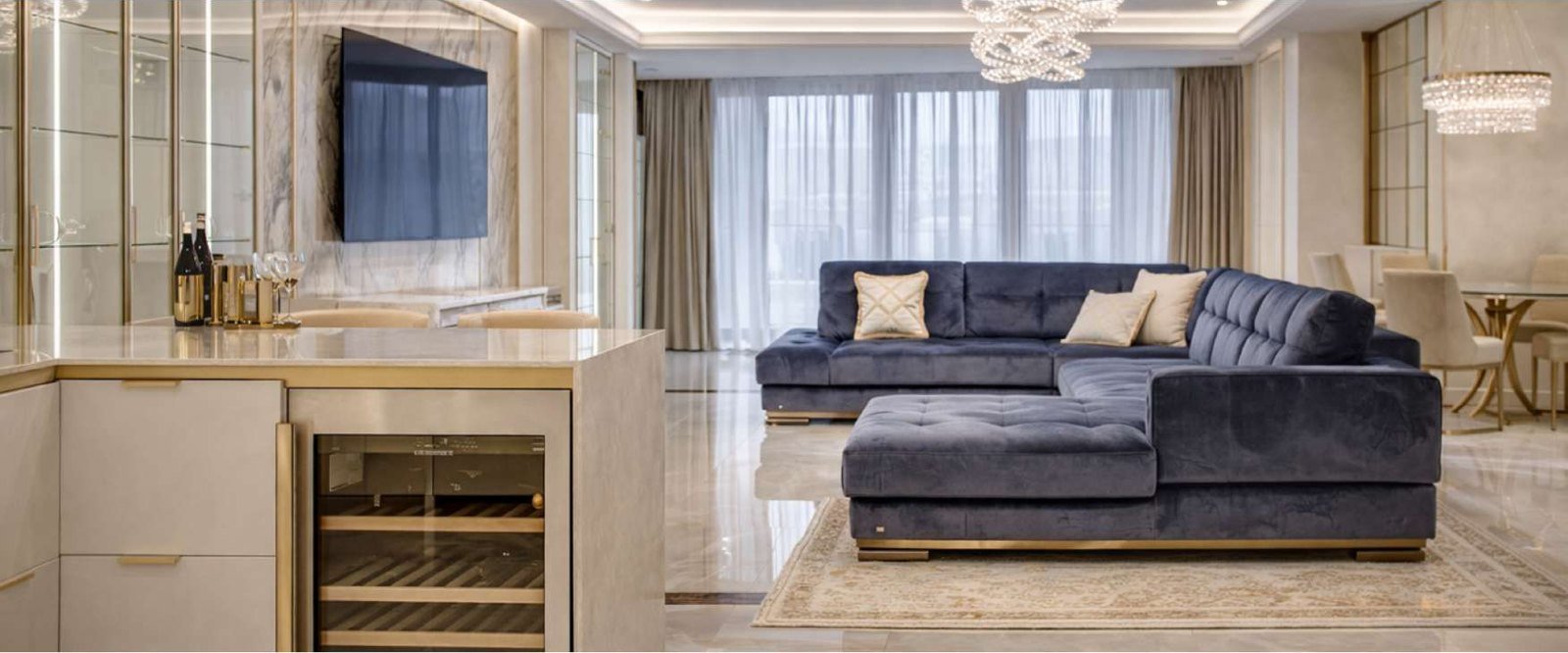
The same scope, two different jobs
A Business Bay office floor arrives with most of the infrastructure already in the building. There is chilled water at the riser, or a fresh air handling unit serving your floor, or both. There is a sub-main position waiting in the electrical riser. There is a sprinkler grid above the ceiling and a detection loop wired back to a panel that belongs to the building, not to you. Your job is a modification to somebody else's live system, carried out while the tenants above and below carry on working.
An Al Quoz unit arrives with a roller shutter, a meter, some high-bay lighting, a hose reel and very little else. Nothing is live except the lighting circuit. Nobody is inconvenienced by noise. The building will not object to you drilling at two in the afternoon. In exchange, everything you need has to be created: cooling, fresh air, extract, drainage falls across a slab that never had any, and often a supply larger than the one the landlord leased you.
That is the whole difference in one line. In a tower you negotiate access to existing systems. In a shed you build the systems and negotiate capacity.
What building management decides in a Business Bay tower
Business Bay sits on mainland land, so building control runs through Dubai Municipality with Dubai Civil Defence on fire and life safety. That part is uniform across the district. The house rules are not, because the towers were developed and handed over separately, and each management company writes its own regime.
For an MEP package, four of those rules matter more than the rest.
The building NOC covers all of it and comes before the municipality submission, not after. Management is confirming that what you have drawn does not compromise the building's fire strategy, its structure or its base-build services, and that confirmation belongs in the permit file.
- Fire system isolation. Cutting a sprinkler branch, adding a head, or moving a detector means the floor's zone comes off line. Managed towers treat that as a building event: a written permit, a fire watch, the isolation logged in the control room, and a defined window to put it back. You will usually get that window at night or on a weekend, and you will usually get one attempt at it.
- Chilled water tie-in. Many Business Bay towers run on district cooling with a BTU meter on the tenant side. Draining a section of the loop to make a connection needs the FM to isolate valves, which is scheduled around the rest of the building rather than around your programme.
- Hot works. Welding, grinding and brazing on copper need a separate permit, often with the detection zone isolated for the duration, and in some buildings a supervisor from the FM on the floor while it happens.
- Out-of-hours supervision. If the only window for your noisy or disruptive work is after trading hours, somebody pays for the security officer and the FM engineer who stay behind. Establish who, in writing, before the programme is priced.
MEP contractors in Business Bay work around the lift, not the drawing
The service lift is the single most underestimated constraint in tower work, and it hits MEP harder than any other trade because MEP arrives as long, heavy, awkward material.
Get the internal dimensions and the weight limit before anyone details anything. Duct sections get fabricated to fit the lift car, which usually means shorter lengths and more site joints than a workshop would like. Cable drums are heavy enough that some buildings restrict them to specific slots with a trolley and two men. Long lengths of threaded rod, tray and trunking either fit diagonally in the car or they get cut, and a cut you planned is better than one improvised in a corridor.
Then there is the shift structure. Core drilling through a slab transmits through the structure, so it lands in whatever window the building allows, and in a mixed-use tower with apartments above the commercial floors that window is short. The moment demolition, coring and fire isolation all move to nights, you are running two crews on one floor: finishes by day, disruptive MEP by night, each needing supervision and each needing the building to keep someone at the desk. That is why two identical floor plates in two different towers do not carry the same price. The work is the same. The calendar and the supervision are not.
The AD Tyres fit-out in Platinum Tower ran on the same arithmetic. JLT sits under DMCC rather than Dubai Municipality, so the paperwork trail was different, but the goods lift still set the length the duct sections could be cut to, and coring and fire isolation still moved to a night shift once the building fixed its hours. Authority changes at the district line. The lift and the tenants above you do not.
Al Quoz: access is easy, the supply is not
Al Quoz Industrial 1 to 4 are mainland plots under Dubai Municipality, the same authority that covers Business Bay. Access is at grade, deliveries are unrestricted in most units, and a forklift does the work a booked lift does in a tower. Contractors like working there for a reason.
The constraint moves to electricity. Industrial units are commonly leased with a supply sized for lighting, a shutter motor and a small office. Put in a showroom with feature lighting, a production area, a data rack, a coffee counter, or serious cooling for a converted space, and the connected load looks nothing like what the meter was set up for. That means a DEWA application, an installation carried out by a contractor enrolled with DEWA, an inspection, and energisation on DEWA's timetable rather than yours.
As a practical marker rather than a rule: once demand climbs past roughly 100 kVA the connection tends to stop being a straightforward meter question and turns into a supply application with substation and cabling issues attached. Where your unit sits against that marker is worth establishing in week one, because the load calculation has to be done before the design is frozen, not after the lighting has been specified.
The second Al Quoz surprise is drainage. Sheds are poured flat with no falls and no waste route. New washrooms, a pantry, a wash bay or a treatment area mean cutting the slab, building falls, and in some units a lifting pump because gravity does not get you to the connection point. That work is noisy, dusty and cheap to do early, expensive to do once the floor finish is down.
Fire is the heaviest line in an Al Quoz MEP package
On a tower fit-out, fire is a modification. On an Al Quoz unit it is frequently the largest single element of the MEP package, and it is the item most likely to send a finished installation back for rework.
Sprinkler design in a storage or production space follows from what you store, how you store it and how high, and the code treats those inputs seriously. Change the goods after approval and the design can be invalidated. Add a mezzanine and the area below it loses the ceiling sprinkler coverage, which brings its own sprinkler level, detection, emergency lighting and signage with it. Add height and density and ceiling sprinklers stop being sufficient at all, which moves you to in-rack lines or an ESFR scheme, and an ESFR scheme needs more water at higher pressure than the landlord's tanks and pump set may have been sized to deliver. That last one is a base-build conversation, not a fit-out item. We covered the storage side of this in the guide to warehouse fit-out, racking and Civil Defence.
Alongside sprinklers, large-volume spaces bring smoke ventilation into the scope, and that is a mechanical package with fans, dampers, controls and a cause-and-effect matrix behind it. Hose reels, landing valves, detection zoning and fire-rated separation between an office block and a storage area all sit on the same submission.
One detail that costs people money: every duct hanger, every sprinkler drop and every tray support in a shed is a hanging load off the roof steel or the purlins, and industrial landlords commonly restrict what you may hang and where. Get that position in writing before the services are coordinated, because a landlord objection at first fix is a redesign.
Cooling a shed and cooling a floor are different calculations
In a Business Bay office the cooling load is driven by people, lighting and equipment, and you are distributing capacity that already exists in the building. The design questions are about zoning, fresh air per person, and whether the base-build fresh air unit can actually deliver what your headcount needs. It often cannot, and that is a landlord conversation rather than a contractor scope.
In Al Quoz the envelope does the driving. An uninsulated metal roof in July is a heat source, not a boundary, and a cooling load calculated on occupancy alone will be wrong by a wide margin. The options are usually packaged units, ducted splits or VRF, with condensers in the yard or on the roof, and both positions need landlord approval plus a check that the roof sheet and purlins will take the weight and the maintenance access.
Extract is the other divergence. A tower office needs toilet and pantry extract and not much else. An Al Quoz conversion may need spray extract, welding fume extract, kitchen extract with make-up air, or general dilution ventilation across a volume several times larger than an office floor. Whatever you extract has to be replaced, and make-up air is the item most often left out of a first budget. A space running at heavy negative pressure pulls the shutter seals, whistles at every door and never holds temperature.
Standby power: what the tower gives you and the shed does not
Managed towers run a standby generator, and tenants assume it covers them. Usually it covers life safety and selected risers: fire pumps, smoke fans, emergency lighting, one lift, sometimes the landlord's chilled water pumps. Whether your distribution board gets an essential feed is a specific question with a specific answer, and it belongs in the survey. If it does not, and your business cannot lose a server or a cold room, the UPS or the small generator is tenant scope with its own space, ventilation and fire implications.
In Al Quoz there is often no standby supply at all, and no shared infrastructure to connect to. Anything you need is yours to install, site and get approved, including where a generator sits, how it is fuelled and how the exhaust is routed.
Which authority sees your drawings, and in what order
Both districts sit on mainland land, so both go through Dubai Municipality for the building permit, Dubai Civil Defence for fire and life safety, and DEWA where supply or load changes. Cross a boundary and the map changes: Palm Jumeirah and the Jebel Ali areas go through Trakhees, Dubai Design District and the TECOM clusters through the Dubai Development Authority, JLT through DMCC, and DIFC runs its own building control. The full breakdown is in our note on which authority approves a Dubai fit-out.
What changes between the two districts is the order and the critical path.
In a Business Bay tower the building NOC is the gate. Nothing goes to the municipality, no material comes through the loading bay and no worker gets a pass until the management company has reviewed the drawings and signed. So the first fortnight of the programme belongs to the FM office, and the useful work in that window is the survey: opening the existing ceiling in several positions to see what is actually up there, rather than trusting as-built drawings from a building that was handed over fifteen years ago.
In Al Quoz the landlord's consent is normally a short letter and the critical path moves to DEWA and Civil Defence. That reorders everything. The load calculation and the DEWA application want to start while the layout is still being developed, and the fire submission needs the commodity classification and the layout agreed before anyone details pipework.
The sequencing mistake we see most often is treating approvals as a phase. Submit the fire drawings to Civil Defence in parallel with the municipality file rather than waiting for the building permit to land first, and get the DEWA load application moving as soon as the load is known. Running them in series rather than in parallel adds weeks to a programme without adding a single day of useful work.
Timelines we plan against, and why they move
We do not publish guaranteed durations, because no contractor controls an authority's queue. What follows is how we plan, and it is a planning assumption rather than a service level.
A building management NOC in a managed tower usually comes back within a week or two when the drawing set answers the obvious questions. A Dubai Municipality fit-out permit on a straightforward office is often a matter of working days; a food unit or a retail unit with kitchen, shopfront or drainage scope takes considerably longer. Civil Defence review runs anywhere from about a week to a month depending on the size of the fire scope. Free zone authorities run their own queues, and a DDA submission commonly takes longer than the equivalent mainland route. DEWA sits on its own track: a simple metering change is quick, a new supply or a significant load increase is not.
Every one of those figures moves for the same two reasons. The first is how complete the submission was on day one. The second is how many times it comes back with comments, because a returned file does not resume where it stopped, it rejoins the queue. A drawing set that answers the predictable questions first time is worth more to your programme than any amount of following up.
What to ask an MEP contractor before signing
Search results for MEP contractors in Business Bay or Al Quoz produce directory listings, and directory listings tell you nothing about whether a firm has worked in your building. No contractor holds exclusive rights to a tower. What matters is whether they hold a current record with your authority and your facilities management office.
If the answers to the first three are vague, the rest of the meeting is decoration.
- Which authority does your submission go under, and what have you filed through it in the last few months?
- Are you enrolled with DEWA for the electrical installation, and who signs the application?
- Who submits the sprinkler and detection drawings to Civil Defence, and under whose approval?
- Which towers or industrial estates have you worked in recently, and who was the building or estate manager?
- What is your plan when the building restricts noisy work and fire isolation to nights? A contractor who has not costed a second shift will improvise one at your expense.
- What is excluded: building deposits, permit fees, out-of-hours supervision, waste removal, landlord-nominated fire works?
- Have you surveyed above the existing ceiling, or are you pricing from the landlord's drawings?
Where we sit
REDESIGN FIT OUT is a turnkey commercial fit-out contractor in Dubai, working on offices, restaurants and cafes, retail units, clinics, salons and industrial conversions, with the MEP package inside our contract on most jobs. Tower work and Al Quoz unit work are different disciplines and we price them differently, which is why our fit-out process page breaks the sequencing out by building type rather than quoting one generic programme.
If you have a unit and a date, send us the floor plan, the lease and the building's fit-out pack on +971 56 508 0888, or start from the estimate page. The fit-out pack is the document that decides your programme, and it is the one most tenants have never opened.
Questions this raises
Do Business Bay and Al Quoz need different approvals for MEP work?
Both are mainland Dubai, so both run through Dubai Municipality for the building permit, Dubai Civil Defence for fire and life safety, and DEWA where the supply or connected load changes. The difference is the sequence. A Business Bay tower puts the building management NOC in front of everything, and no submission or site access happens until it is issued. In Al Quoz the landlord's consent is usually quick and the critical path shifts to the DEWA supply application and the Civil Defence file.
Why does MEP work in a Business Bay tower end up on night shifts?
Because three of the noisiest and most disruptive items are controlled by the building. Core drilling transmits through the structure and is restricted to permitted hours. Isolating the fire panel takes a whole zone off line, so the building schedules it when the fewest people are affected. Draining a section of the chilled water loop for a tie-in has the same problem. Once those move to evenings or weekends you are running two crews, and the supervision and out-of-hours building charges come with them.
What drives the MEP cost in an Al Quoz warehouse or showroom?
Fire protection is usually the biggest single element, because a storage or production space brings sprinkler design tied to what you store and how high, smoke ventilation for a large volume, and detection across a much bigger footprint than an office. Electrical supply is next: sheds are leased with modest supplies, and a showroom, production area or serious cooling load frequently means a DEWA application. Drainage runs third, since the slab was poured with no falls and no waste route.
Can Civil Defence and Dubai Municipality submissions run at the same time?
In practice yes, and running them in parallel is how you protect the programme. Waiting for the building permit before starting the fire submission adds weeks without producing any work. The same applies to the DEWA load application, which should start as soon as the load is calculated rather than after the design is signed off. What you cannot parallel is the building or estate NOC in a managed tower, which genuinely does come first.
Does a showroom conversion in Al Quoz need a DEWA application?
If the connected load changes materially, yes, and a conversion from storage to showroom almost always changes it. Feature lighting, additional cooling, an office pod and any equipment on the floor add up quickly against a supply sized for high-bay lighting and a shutter motor. The installation has to be carried out by a contractor enrolled with DEWA, and energisation follows DEWA's own inspection. Get the load calculated before the lighting design is frozen, because that is the cheapest moment to find out.
How do I check that a contractor has really worked in my building?
Ask for the paperwork rather than the portfolio. A signed building NOC and a permit from that tower or estate, the name of the facilities manager who issued it, and a recent submission under the same authority your unit falls under. Photographs prove someone finished a room somewhere. A signed NOC proves they got through the building that is about to decide your programme.
Send the drawings, or just the address.
We measure, check the services and tell you what the authority will require.
Other notes
Comparing fit-out quotes in Dubai: reading BOQs line by line
Three fit-out quotes on the same drawings can differ by 40 per cent. How to read a Dubai BOQ line by line: preliminaries, MEP, provisional sums, fees, VAT.
20 September 2026 · 9 min read
Cloud kitchen fit-out in Dubai: what delivery-only changes
Cloud kitchen fit-out in Dubai: how delivery-only changes extraction, make-up air, 500-800 sqft layouts, courier access, shared hubs and reinstatement.
19 September 2026 · 11 min read
Mall kiosk fit-out in Dubai: costs, landlord specs and approvals
What a mall kiosk fit-out in Dubai costs, what Emaar, Majid Al Futtaim and Nakheel malls specify, and how DM, Civil Defence and Trakhees approvals run.
18 September 2026 · 10 min read