
FF&E procurement in a Dubai fit-out: who buys the furniture and when
A fit-out rarely stalls on blockwork. It stalls on furniture. The unit can be painted, the MEP tested, the Civil Defence inspection closed and the permit signed off, and the office still cannot open on Sunday because sixty task chairs are sitting in a container at Jebel Ali behind a packing list that does not match the carton labels. On a standard Dubai lease the tenant pays for FF&E. The contractor buys only what is written into the bill of quantities. The order needs to be placed roughly twelve to sixteen weeks before the day you want to trade, and if anything is coming from Italy, earlier than that. Everything below is the part of that sentence that costs money when it is assumed rather than agreed.
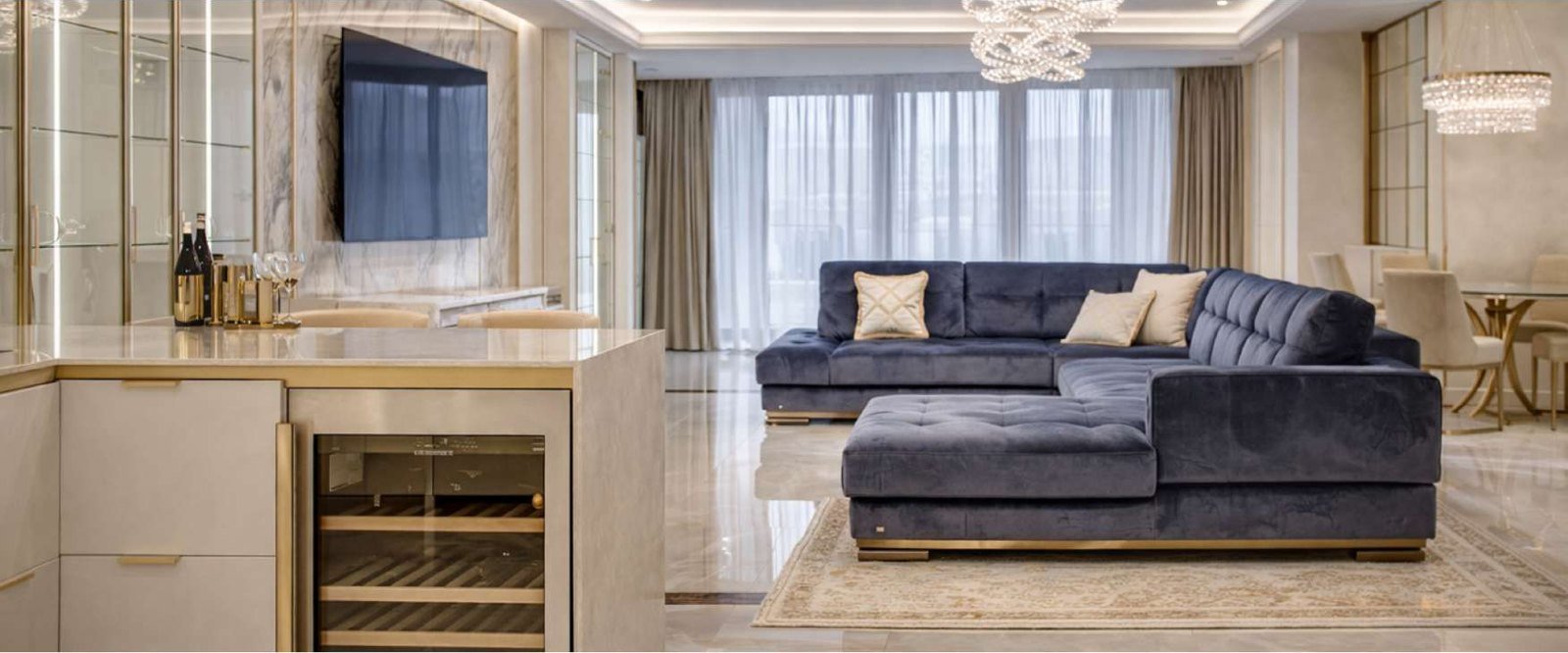
What FF&E covers in a fit-out, and where it stops
FF&E means furniture, fixtures and equipment: the loose and semi-fixed items that arrive after the construction scope is largely done. Workstations, task chairs, meeting tables, lounge seating, reception desks, lockers, decorative light fittings, window treatments, loose planters, back-of-house racking. Screens and AV sit on the line and are usually handled by the IT contractor.
It is not the construction scope. Partitions, ceilings, flooring, painting, fixed joinery, fire systems and the mechanical, electrical and plumbing works belong to the fit-out contract and are covered by the permit and the inspections. FF&E is generally outside the permit, which is exactly why it drifts out of the programme too.
In F&B and hospitality a second category appears: OS&E, operating supplies and equipment. Crockery, cutlery, glassware, linen, uniforms, back-of-house smallwares. Nobody builds those into a contract, and on a restaurant fit-out they are the items an operator remembers three days before soft opening. Kitchen equipment, by contrast, behaves like FF&E with a construction dependency: extraction, gas and drainage positions are fixed by the equipment schedule, so the equipment has to be chosen long before it is bought.
Who buys it: landlord, tenant, and the Cat A to Cat B line
Dubai office towers follow the London convention. Cat A is what the landlord hands over: raised floor, suspended ceiling, primary services, sprinklers, blinds, finished core and common areas. Cat B is everything that makes it your office, and FF&E is Cat B. There is no serious argument about who pays.
The argument is about the landlord contribution. Many leases in JLT, Business Bay and the DDA zones offer a fit-out allowance against Cat B works, and a large share of those leases quietly exclude loose items, IT and anything not forming part of the premises. A tenant budgets furniture against the allowance, submits the invoices at the end, and learns in month eight that only the contractor's certified valuations qualify. Read the contribution clause before the furniture budget is signed, not after.
A related gap sits in the free-issue clause. If the tenant buys the furniture directly and the contractor is expected to install or coordinate it, the contract has to say when those items land on site. Without a dated obligation running in both directions, the contractor's programme is exposed to a supplier it never chose, and you will meet that fact as an extension of time claim with prelims attached. On the office fit-out projects we run, that clause is written before the BOQ is priced.
Fit-out furniture lead times in Dubai, by source
Local, Chinese and Italian sourcing each carry a different planning reality, and mixing them without a critical path is how a handover slips.
Locally manufactured in Al Quoz, Al Qusais or the industrial areas: production typically runs three to six weeks from the day shop drawings and samples are approved. Approval of those drawings is its own cycle, usually two to four weeks for a straightforward commercial package. A wrong panel can be measured in the morning and replaced the same week, which is the real value of buying local.
China: production for contract furniture usually sits at eight to fourteen weeks, sea freight from the main Chinese ports to Jebel Ali runs roughly four to six weeks, and clearance plus inland delivery adds another one to two. Call it thirteen to twenty-two weeks from a signed order to a pallet on your floor. Factories close for two to four weeks around Chinese New Year, somewhere in late January or February depending on the year, and an order placed in December often loses that entire window.
Italy and premium European brands: made-to-order production commonly runs ten to sixteen weeks before anything ships, and total door-to-site time lands in the twenty to thirty week band. Italian factories shut for most of August. A specification signed in July with a November opening date is already late and nobody in the chain will say so out loud.
One supplier with a long lead time governs the whole handover. It does not matter that the other ninety percent of the package is ready in four weeks.
When to order so the programme holds
Work backwards from the date furniture has to be on site, which is not the handover date. Furniture needs to land one to two weeks before handover: installation, snagging, replacement of anything damaged, then the final clean. Building the schedule to the opening day leaves no room for the one item that always arrives wrong.
For a locally sourced office package, that means placing the order twelve to sixteen weeks before you want to open, because the shop drawing and sample cycle sits in front of production. For an imported package, add the freight and clearance window on top and decide the specification before the construction contract is even signed.
Phase the buy rather than releasing it in one order. Long-lead imported items first, on the day the layout is frozen. Local joinery and workstations second, once site dimensions are verified. Loose seating and accessories last, when you know the exact floor finish. We also order a single prototype workstation before the bulk release on any order above about thirty positions. A prototype costs one unit and a week; discovering a wrong worktop depth across two hundred desks costs the opening. Our fit-out process puts that prototype approval at the same gate as the joinery sample board, for the same reason.
Importing FF&E into the UAE: Jebel Ali, HS codes and Mirsal 2
Most contract furniture enters Dubai by sea through Jebel Ali. The declaration goes through Mirsal 2, Dubai Customs' clearance system, and it needs a registered importer behind it. A tenant company without a customs business code cannot be the importer of record, so either the contractor, the supplier's local agent or a freight forwarder takes that role. Decide which one before the goods ship, because sorting it out while a container accrues storage charges is expensive.
Furniture generally falls under HS Chapter 94, with seating at 9401 and other furniture at 9403. The standard UAE customs duty is five percent of the CIF value, and import VAT at five percent is calculated on the customs value plus that duty. If the importer's TRN is linked to the customs registration, the VAT flows through the reverse charge on the return instead of being paid in cash at the border. Unlinked registrations mean real money leaving the account at the worst moment of the programme.
What actually holds containers at Jebel Ali is paperwork, not tax. A packing list whose carton marks do not match the labels on the boxes. A commercial invoice describing everything as "furniture" while the declaration carries a specific HS code. A certificate of origin missing for goods claiming preferential treatment. A value on the invoice that does not tie to the purchase order. Any one of those turns into an inspection, and inspections are measured in days while carriers give only a handful of free days before detention and demurrage start ticking per container per day.
Goods can also sit in a free zone warehouse under duty suspension. Duty triggers when they cross into the mainland, which makes the free zone useful when a site is not ready and the cargo has already sailed.
Storage between clearance and a site that is not ready
This is the most common contract hole on the whole subject, and the one we raise first at contract stage.
Furniture clears customs on a date driven by shipping. The site becomes ready on a date driven by construction and inspections. Those two dates never coincide, and when the second one moves, somebody has to pay for a warehouse. Standard supply contracts say nothing about it. Standard fit-out contracts say nothing about it either, because the goods are not in their scope.
Write a named date into the supply agreement after which storage is at the client's cost, with the rate stated. Confirm who insures the goods while they sit, and check that the policy covers storage as well as marine transit, since the two are often separate lines. Name the party with authority to release stock to site, or a delivery driver will hold a truck outside a tower at 7am waiting for somebody to answer a phone.
The alternative is worse and we see it every few months: furniture delivered to a live site because the supplier had no other option. Cartons get stacked in a room the painters need, they absorb dust, corners take damage from other trades, and a quarter of the boxes are opened by people looking for something else. The damage claim afterwards is unwinnable because nobody can prove when the damage happened.
Malls add their own layer. On the Saudi Dates Centre unit at Dubai Hills Mall the programme ran twelve weeks end to end, and most of that time was landlord logistics rather than manufacturing: booking the loading bay, fitting items through the service lift, and waiting for the next available night slot when a delivery slipped by a day. Mall deliveries almost always happen after trading hours, and a missed slot can cost a week.
Receiving and snagging imported furniture
Inspect before you sign, and photograph before you sign. A signed clean delivery note is the end of most claims.
What we check on arrival, in order: external carton condition and any crush damage before anything is opened; counts against the packing list, carton by carton; transit damage on corners, edges and glass; finish shade and grain against the approved sample, since veneer and laminate batches drift between production runs and fabric dye lots do the same; dimensions against the shop drawing, especially worktop depths and anything that has to fit an existing recess; handing and component completeness on modular items, because missing fixings from a Chinese container take another six weeks to replace by sea.
Note every defect on the delivery note itself, with photos taken before signature. Suppliers typically allow a short window for concealed damage claims, often around seven to fourteen days, and the clock starts at delivery rather than at installation. Furniture stored in cartons for a month and unpacked after the claim window has expired is your problem.
Shade variation is the defect that generates the most argument and the fewest replacements. Order everything in one production run where you can. Where you cannot, accept it in writing in advance or specify a finish that does not show batch drift. For public areas, Civil Defence consultants frequently ask for flame-spread certificates on upholstery and drapes, so collect those certificates with the delivery rather than chasing a Chinese factory for them during the inspection week.
Office furniture procurement budgets in Dubai
Planning figures, not quotations, and they move with specification and volume.
A locally manufactured workstation package covering desk, pedestal and a decent task chair generally sits somewhere around AED 2,500 to 5,000 per person. Imported mid-market contract furniture moves that to roughly AED 6,000 to 12,000. Premium European brands push past AED 15,000 per person and keep going, with a single flagship task chair often accounting for AED 5,000 to 8,000 of that. Meeting rooms, reception and lounge areas are priced separately and can exceed the workstation total on a floor with a lot of client-facing space.
As a share of project spend, FF&E and specialist equipment usually account for fifteen to twenty percent of a commercial fit-out contract value. A premium F&B project runs higher once kitchen equipment is counted, and a bare-bones warehouse office runs lower. If your furniture budget is under ten percent of the total, the specification is probably thinner than the drawings show.
Landlord fit-out guides and brand approvals
In malls and managed towers the landlord approves more than the construction drawings. Tenant coordination teams at Emaar, Majid Al Futtaim and Nakheel properties review shopfront design, visible fixture finishes, signage and often the loose furniture in customer-facing areas. That review is a comment cycle, not a rubber stamp, and it commonly adds two to four weeks before an order can be released.
Franchised brands add a second approval. Head office signs off the fixture package against a global brand standard, and if that standard specifies a supplier who has never shipped to the UAE, you inherit a new lead time and a new customs conversation at the same moment.
Submit the FF&E specification for landlord review at the same time as the construction drawings, not after. The order cannot be placed until both approvals exist, and every week of comment cycle comes straight out of the manufacturing window.
Questions this raises
When should FF&E procurement start relative to construction?
Before construction, not during it. The specification should be frozen when the layout is frozen, and the order placed twelve to sixteen weeks before the target opening for locally sourced furniture. Imported packages need the freight and clearance window added on top, which usually means deciding the furniture before the fit-out contract is signed.
What are realistic furniture lead times for a Dubai fit-out?
Locally made commercial furniture typically runs three to six weeks in production after shop drawings and samples are approved, with a two to four week approval cycle in front of it. Chinese contract furniture usually lands at thirteen to twenty-two weeks door to site. Italian and premium European orders sit in the twenty to thirty week range, longer if August falls inside the production window.
Who pays for storage between customs clearance and installation?
Whoever the contract says, and most contracts say nothing, which is why this becomes a dispute. Agree a named date after which storage is at the client's cost, agree the rate, and confirm that the insurance policy covers goods in storage as well as in transit. A free zone warehouse keeps imported goods under duty suspension while a site catches up.
Which documents matter most for clearing furniture at Jebel Ali?
The commercial invoice, the packing list, the bill of lading and the certificate of origin, all agreeing with each other and with the Mirsal 2 declaration. The single most frequent cause of delay we see is carton labelling that does not match the packing list. A registered importer with a customs code has to be in place before the goods ship, and linking the TRN to that customs registration keeps import VAT on the return rather than paid in cash at the border.
How does a landlord fit-out guide change the furniture specification?
In malls and managed towers the landlord reviews shopfront, visible finishes, signage and often customer-facing furniture. Expect a comment cycle of two to four weeks and at least one round of revisions. Franchise brand approval runs in parallel and can override a local substitution you had already priced.
What defects show up most often on imported furniture?
Transit damage to corners, edges and glass. Shade and grain variation between production batches on veneer, laminate and upholstery. Dimensional drift on items that have to fit an existing opening. Missing fixings and wrong-handed components on modular systems. Photograph everything before you sign the delivery note, because a clean signature closes most claims on the spot. FF&E is the part of a fit-out where the contract usually goes quiet and the calendar usually goes wrong. If you want the furniture programme built into the construction programme rather than bolted on at the end, call us on +971 56 508 0888 with your handover date and we will tell you what can still be ordered in time.
Send the drawings, or just the address.
We measure, check the services and tell you what the authority will require.
Other notes
Fitting out an office in DIFC or DMCC: the free zone rules that change the job
DIFC and DMCC approve their own office fit-outs: registered contractors, zone NOCs, FODA, deposits, insurance and the working hours that set your programme.
26 September 2026 · 11 min readCivil Defence approval for a Dubai fit-out: what it takes
How Dubai Civil Defence approval works for a commercial fit-out: parallel filing, who can submit, certificates, inspection day, and why files get rejected.
25 September 2026 · 12 min readDEWA approval in a Dubai fit-out: when you need a load increase
When does a Dubai fit-out need a DEWA load application instead of simple metering? Thresholds, enrolment rules and the inspection that releases your meter.
24 September 2026 · 13 min read