Fit-out companies in Business Bay: what the tower decides
Fit-out companies in Business Bay price the same office twice over. Once for the drawings, which go to Dubai Municipality on the ordinary mainland route. Once for the building, which is a separate negotiation with whoever manages the tower, and that is where most Business Bay programmes quietly gain or lose weeks. Business Bay is a Dubai Properties master development, part of Dubai Holding, built out along the Dubai Water Canal. That settles the permit question and settles nothing else. The towers inside it went up under different developers, are run by different owners associations and different facilities managers, and each of those writes its own working hours, lift booking system and delivery regime.
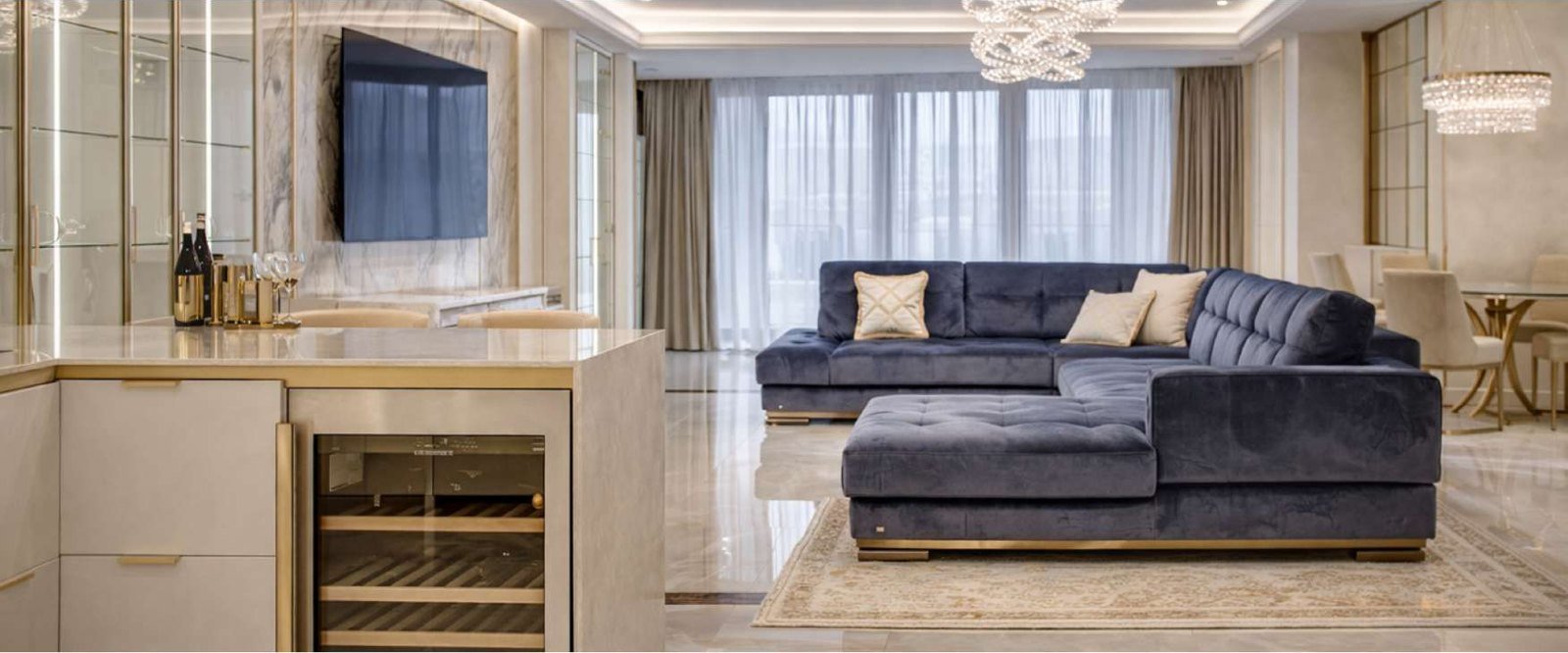
What Business Bay is, and why fit out companies in Business Bay price it by the tower
Business Bay sits on mainland land. Building control runs through Dubai Municipality, with Dubai Civil Defence on fire and life safety and DEWA on supply. That puts it in the same regulatory column as Sheikh Zayed Road, Al Barsha, Deira and the mainland malls, and in a different column from its neighbours. JLT runs through DMCC. Dubai Media City and the other TECOM clusters run through the Dubai Development Authority. DIFC operates its own building control. Palm Jumeirah and the Jebel Ali areas go through Trakhees.
The difference that bites on site is not the authority. It is who writes the house rules.
In a free zone district the zone authority publishes a fit-out process and applies it across its own buildings. Read it once and you have a fair idea what the next tower will ask for. Business Bay does not work that way. The government layer is uniform. The building layer is not, because these towers were never developed or handed over as a single estate.
Executive Towers, the first buildings completed in Business Bay, is a Dubai Properties complex of twelve towers, ten of them residential, with Aspect Tower on the commercial side and a hotel tower in the same cluster. Churchill Towers, a short drive away, was developed by Emirates National Investments: Churchill Executive is a forty-three storey office building, and Churchill Residency beside it is a fifty-nine storey residential one. Same district, different developer, different management company, different answer at the loading bay.
So the first question about a Business Bay unit is never what Business Bay requires. It is which tower, and who manages it.
Who approves an office fit out in Business Bay, and in what order
The government side is well trodden and we have written it up in full in which authority approves a Dubai fit-out. The short version for a Business Bay tower runs like this.
You need the lease and the tenancy registration in place before anything else, because the building will not open a file for someone whose name is not on the unit. Then the building management or owners association reviews your drawings and issues its NOC. Then the design goes into Dubai Municipality's Building Permit System, submitted under a consultant or contractor registered with Dubai Municipality rather than by you. Dubai Civil Defence reviews the fire and life safety scope, which is triggered by far less than people expect: new partitions change compartmentation and escape routes, and moving a single sprinkler head or detector head is a modification to the building's system, not a decoration item. DEWA comes in where your load changes, which it usually does the moment a server room, a demo kitchen or extra cooling appears on the drawing.
The order is the part contractors get wrong. The building NOC is not a courtesy that follows the permit. It sits in front of it, because the building is confirming that what you are drawing does not touch its structure, its fire strategy or its base-build services, and that confirmation belongs in the file.
One Business Bay specific to raise early: ask the building manager, in writing, whether a master developer NOC is required on top of the building's own approval for your particular tower. That answer varies with how the building was handed over and who holds the common areas. It is a question for the building manager, not a thing your contractor should be assuming from the last job.
We do not publish timelines for these steps, because the only honest answer depends on the scope and on how clean the first submission is. A drawing set that answers the obvious questions the first time moves. One that comes back with comments rejoins a queue nobody on your side controls. That is the real argument for running approvals alongside design development and long-lead procurement instead of treating them as a phase that starts after sign-off. Our own fit-out process runs in that order for exactly that reason.
The building NOC is a technical review, not a formality
Building management in a Business Bay tower is protecting an asset it has to keep running while you build inside it. The review reflects that.
Expect questions about loads on the slab if you are putting in heavy storage, a safe, gym equipment or a stone-topped island. Expect the fire strategy to be checked against the base build, because your ceiling plan changes where sprinklers and detectors land and your partition layout changes travel distances. Expect waterproofing details for any new wet area, since the unit below yours is the reason that clause exists. Expect them to want to see how you are tying into the base-build air conditioning and, in newer towers, into the building management system.
Then come the commercial conditions. Contractor insurance certificates before anyone reaches site. A refundable security deposit against damage to common areas. Named supervision. And, buried in the lease rather than the fit-out pack, the reinstatement obligation that tells you what the unit has to look like when you eventually leave. That clause is worth reading on day one rather than in your last month, and we have set out why in our note on office reinstatement in Dubai.
Tower rules that decide the programme
None of the following appears on a floor plan. All of it appears in the programme.
Any contractor who has worked in an occupied tower will read that list and nod. It is the same regime we work under on our office fit-out projects in Platinum Tower in JLT, and the mechanics travel.
- Service lift booking. Most towers run one goods lift for every trade in the building, booked in slots. Get the internal dimensions and the weight limit before you draw anything large, because a three metre reception desk that will not fit becomes a two-piece desk with a site joint, and a joint you designed is better than one a carpenter invents in a corridor at midnight.
- Loading bay access. A booked window, a clear height limit that decides whether your delivery arrives on a three tonne truck or a pickup, and a queue shared with every other tenant taking deliveries that day.
- Worker passes. Photo ID, a copy of the visa and often a short building induction, issued per person. Add a labourer on Thursday morning and he may not be upstairs before Sunday.
- Noisy works windows. Core drilling, chasing and demolition are usually restricted to defined hours, and in a mixed-use tower with residents above you those hours get short.
- Hot works. Welding, grinding and anything else with a spark normally needs a separate permit, a fire watch and sometimes an isolation of the detection zone, arranged with the building in advance.
- Protection and hoarding. Lift car linings, corridor floor protection and a hoarding line at your entrance, put up before the first bag of debris moves and inspected by the building.
- Waste removal. There is no chute for construction debris. It goes down the same booked service lift, out through the same loading bay, into a skip in a location the building nominates, at times the building nominates.
Access windows and what an interior fit out in Business Bay costs in time
Here is the arithmetic that surprises tenants.
A crew that can work eight hours a day is not the same as a crew that can move material for eight hours a day. If the goods lift is available to you in two booked slots, everything heavy has to land inside them, and everything else has to be sequenced so that nobody is standing in an empty unit waiting for their material to arrive. Strip out a couple of hours of building peak in the morning and evening and a nominal working day shrinks in a way that no Gantt chart drawn from floor areas will predict.
Then the restrictions stack. In a tower with residents, noisy work moves to a late window, which means your demolition and your core drilling happen after the quiet trades have gone home. In a tower with a busy ground floor, deliveries move to the evening or overnight. The moment either of those becomes the rule, you are running two shifts on one unit: a day crew on finishes and a night crew on the disruptive work, both needing supervision, both needing the building to keep someone on the desk.
That is the honest reason two identical units in two different Business Bay towers do not carry the same price. Restricted access does not make the work harder. It makes the same work take more calendar and more supervision to produce the same output, and it forces material into the unit early because there is nowhere else to stage it. Anyone quoting a Business Bay office without asking about lift slots and working hours is quoting a floor area, not a job. Our page on how long an office fit-out takes in Dubai goes through the programme drivers in more detail.
Summer adds one more constraint that is easy to forget while looking at an air-conditioned floor plan. From 15 June to 15 September, work in direct sunlight and in open areas is prohibited between 12:30 and 15:00 under the UAE midday break, which MoHRE has run since 2005 and confirmed again for 2026. Your fit-out is indoors. Your loading bay, your skip and your unloading crew frequently are not.
Parking, deliveries and the small things that go wrong
Business Bay is dense, the road network funnels through a limited number of entrances onto Sheikh Zayed Road and Al Khail, and street parking around the towers is mostly paid public parking rather than something the building can hand you. Confirm with the building manager how many contractor bays, if any, come with the unit, and plan on the assumption that most of the crew arrives by Metro or taxi rather than in a van parked outside.
Deliveries are the other daily friction. A truck reaching a Business Bay tower at 06:30 is a short run from anywhere in the city. The same truck at 17:30 is an hour of a driver's day and a loading bay slot you may forfeit. Where the schedule allows it, we run heavy deliveries early and keep the afternoon for work that does not need the lift.
Write the small items into the contract rather than discover them on site. Confirm which floor access route your crew uses, because in several towers the tenant lift and the goods lift lead to different lobbies and only one of them will let a man carrying a sheet of plasterboard through. Confirm too who pays for out-of-hours building supervision when you run a night shift, because somebody is paying for that security officer and it should not be a conversation in week six.
What to ask fit out contractors in Business Bay Dubai before you sign
Every contractor's website says it works in Business Bay. The district is a five minute drive from half the industrial workshops in Dubai, so that claim costs nothing to make. These are the questions that separate the ones who have actually done it.
If the answers to the first two are vague, the rest of the meeting is decoration.
- Which towers, and who was the building manager. A firm that has genuinely delivered here names buildings and names the management company without hesitating.
- Show me a signed building NOC and a Dubai Municipality permit from a Business Bay tower. Not a portfolio photo. The paperwork.
- Whose Dubai Municipality registration does the submission go under, yours or a consultant's, and what have you submitted through it recently.
- Who books the service lift and the loading bay, and what happens to the programme when a slot is cancelled at short notice.
- What is the plan if the building restricts noisy work to evenings. A contractor who has not thought about a second shift will improvise it later at your expense.
- What is in the price and what is excluded, in writing. Building deposits, permit fees, out-of-hours supervision and waste disposal are the usual gaps.
- What does the reinstatement clause in my lease commit me to, and is that reflected anywhere in this quotation.
Where we sit
REDESIGN FIT OUT is a turnkey commercial fit-out contractor in Dubai, working on offices, restaurants and cafes, retail units in malls, clinics, salons and warehouse conversions. The tower work in our portfolio sits in Platinum Tower in JLT and on Sheikh Zayed Road rather than inside Business Bay itself, and the regime is the same shape: booked lifts, permits per worker, restricted hours and a building manager whose sign-off gates the programme. The Solvu Solutions office in Platinum Tower and the AD Tyres office in the same building were both delivered under it, as were the Gashisha and Dr Sheesha venues on Sheikh Zayed Road and Saudi Dates Centre in Dubai Hills Mall.
If you have a Business Bay unit and a handover date, send us the floor plan, the lease and the building's fit-out pack on +971 56 508 0888, or start on our estimate page. The fit-out pack is the document that tells us what your programme actually looks like, and it is the one most tenants have never opened.
Questions this raises
Which authority approves a fit-out in Business Bay?
Business Bay is mainland Dubai, so building control runs through Dubai Municipality, with Dubai Civil Defence on fire and life safety and DEWA where the electrical load changes. It does not go through the Dubai Development Authority, which covers the TECOM clusters and Dubai Design District, and it does not go through Trakhees or DMCC, which cover other districts. Before any of that, your tower's building management or owners association reviews the drawings and issues its own NOC, and the government submission is made by a party registered with Dubai Municipality rather than by the tenant.
Do all Business Bay towers follow the same fit-out rules?
No, and this is the main thing that separates Business Bay from a free zone district. The permit route is identical across the district because the land is mainland. The building rules are not, because the towers were built by different developers and are run by different management companies. Executive Towers is a Dubai Properties complex; Churchill Towers was developed by Emirates National Investments. Working hours, lift booking, deposits and delivery windows are set per building, so the fit-out pack for your specific tower is the document that matters.
Does a Business Bay fit-out cost more than the same office elsewhere in Dubai?
We will not publish a percentage premium for the district, because there is no figure we could defend in a client meeting. What we will say is where the difference comes from. Restricted lift and loading access stretches the programme for the same scope of work. Evening or overnight noisy-work windows push you into a second shift with its own supervision. Building deposits, permit fees, out-of-hours security and waste disposal are real line items. Ask any contractor to show those separately in the quotation instead of accepting a rate per square foot that hides them.
Can fit-out work run during normal office hours in Business Bay?
Quiet trades usually can. Demolition, chasing, core drilling and anything else that carries through a slab are typically restricted to defined windows, and in the mixed-use towers with apartments above the commercial floors those windows tend to be tight. Get the permitted hours from building management in writing before the programme is priced, because moving noisy work to evenings changes the shift structure and therefore the cost.
What should I send a contractor to get a realistic Business Bay proposal?
The floor plan with the base-build ceiling and services layout, the lease including the reinstatement clause, and the building's fit-out pack with its working hours, lift specification, deposit and insurance requirements. With those three, a proposal reflects your building. Without them, it reflects an average, and averages are what get revised in month two.
Send the drawings, or just the address.
We measure, check the services and tell you what the authority will require.
Other notes
Joinery companies in Al Quoz: factories, lead times and checks
Joinery companies in Al Quoz, Dubai: how to read a factory on a visit, realistic lead times for custom joinery, and the contract terms that decide who pays.
13 September 2026 · 12 min readHotel fit-out in Dubai: phasing work in an operating property
How a hotel fit-out in Dubai runs while the property keeps selling rooms: zoning, work fronts, dust and noise control, fire safety and the model room build.
12 September 2026 · 12 min readDental clinic fit-out in Dubai: chair services and shielding
What a dental surgery needs that a normal clinic room does not: core services under the chair before the screed, lead shielding signed off, and a plant room.
11 September 2026 · 13 min read